
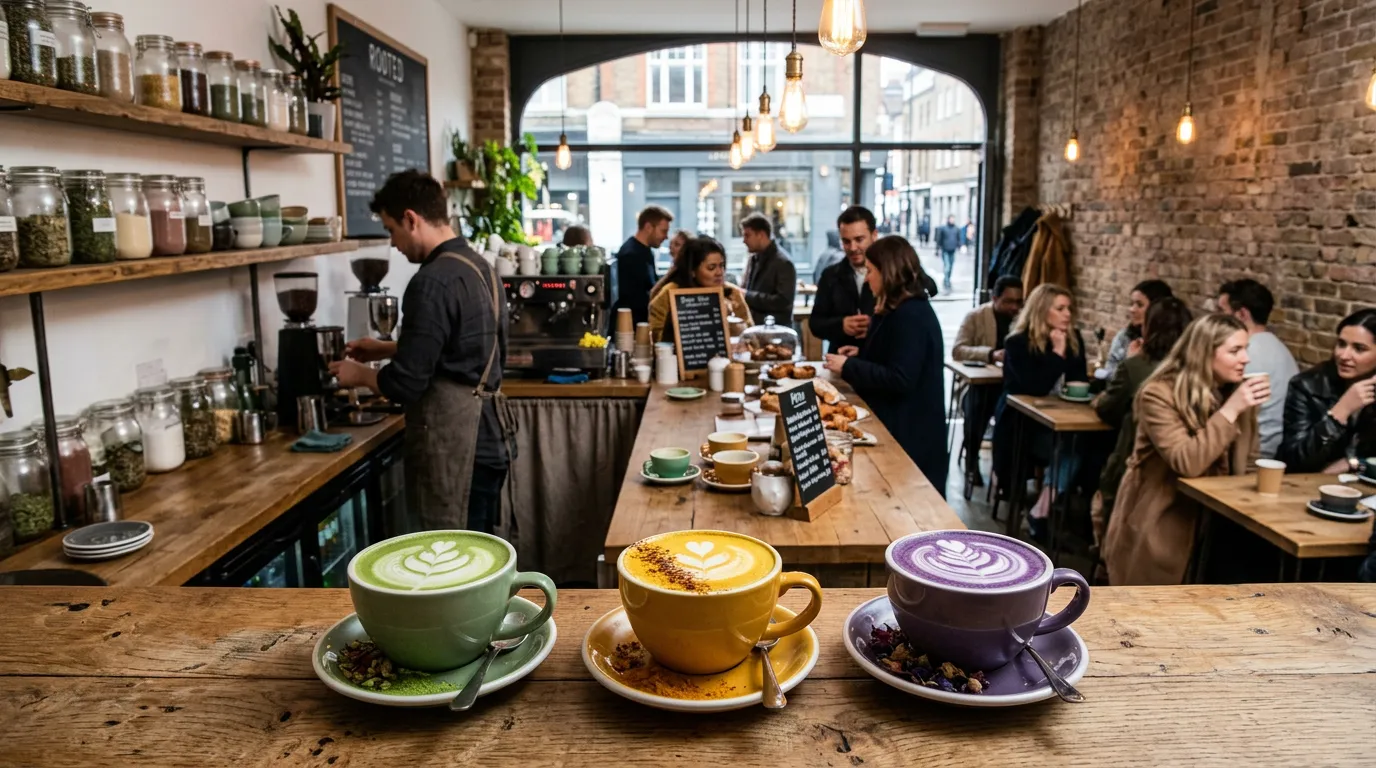
London’s café culture has always been a leading indicator of broader cultural shifts. The rise of the flat white in the early 2010s presaged the mainstream adoption of specialty coffee culture across the UK. The matcha latte boom that followed, driven initially by the Japanese-influenced wellness culture of East London, introduced a generation of London café-goers to the idea that a café drink could be simultaneously pleasurable and nutritionally meaningful. The golden milk latte that followed matcha brought Ayurvedic wellness tradition into the mainstream café environment. And in 2026, the functional warm drink category that these pioneers established has expanded into a genuinely diverse landscape of botanical, adaptogenic and superfood-based beverages that reflects the sophistication of London’s wellness-oriented consumer culture.
This evolution is not merely aesthetic. The Londoners who are choosing ube lattes, ashwagandha moon milks, reishi mushroom coffees and butterfly pea flower teas over standard café drinks are making choices informed by a growing body of nutritional awareness, driven by wellness media, social platforms and a broader cultural shift toward viewing what you eat and drink as a form of preventive self-care. The café has become one of the primary sites where this wellness literacy is performed and reinforced, and London’s most forward-thinking café operators have responded by building menus that reflect both the pleasure-seeking and health-seeking motivations of their customers.
The Filipino food culture that is reshaping London’s restaurant landscape, explored in our guide to Filipino culture in London, is one of the cultural currents feeding this functional drink evolution, with ube in particular having crossed from Filipino community staple to mainstream London wellness ingredient in the space of a few years.
How London’s functional drink evolution happened
The trajectory from flat white culture to functional wellness drinks in London followed a logic that in retrospect seems inevitable. Specialty coffee culture taught London café-goers that the raw material of a drink matters, that the provenance, processing and preparation of an ingredient produce measurable differences in the final experience. This foundational education in ingredient quality created the consumer disposition necessary to embrace a wider range of botanically complex drinks.
The health and wellness media boom of the mid-2010s provided the narrative framework that gave functional drinks their cultural legitimacy. Articles about gut health, adaptogens, inflammation and the microbiome translated complex nutritional science into accessible consumer concepts that gave cafés the language to describe their functional offerings and gave consumers the vocabulary to seek them out. By the time ashwagandha moon milk appeared on London café menus in 2018 and 2019, there was already a consumer segment that understood what an adaptogen was and why they might want one in their afternoon drink.
Instagram and TikTok provided the distribution mechanism that accelerated the adoption of every visually striking functional drink. Matcha’s vivid green and ube’s extraordinary deep purple are precisely the kind of aesthetic raw material that social platforms amplify, creating demand that extends far beyond the wellness community into the broader population of Londoners who want to participate in the visual culture of food and drink.
The functional drinks that are defining London cafés in 2026
Matcha remains the foundational functional warm drink of London’s wellness café scene, its position now so thoroughly established that it functions as a benchmark against which newer arrivals are measured. The sophistication with which London cafés source and prepare matcha has increased significantly since the early days of the trend, with ceremonial grade matcha, proper chasen whisking technique and high-quality plant milks now standard in serious establishments that have moved well beyond the initial novelty phase.
Golden milk, the turmeric latte that arrived in London’s wellness café scene shortly after matcha, has consolidated into a permanent menu fixture whose anti-inflammatory credentials are now widely understood by London café consumers. The best London golden milk preparations use fresh-ground turmeric with black pepper and a quality fat-containing milk, optimising for curcumin bioavailability in ways that reflect a growing sophistication in how café operators think about the functional efficacy of their offerings.
Adaptogenic mushroom drinks, incorporating reishi, lion’s mane and chaga extracts into coffee and milk-based beverages, represent the most recent category to achieve significant London café penetration. The earthy, complex flavours of mushroom extracts have proven more challenging for mainstream palates than matcha or turmeric, and the most successful London cafés incorporating these ingredients have focused on blending them with complementary flavours that moderate their intensity while preserving their functional character.
Ube latte is the most visually spectacular new entrant to London’s functional warm drink landscape and the one that most directly reflects the influence of Filipino food culture on the mainstream London café scene. Its deep purple colour, produced by the extraordinarily stable acylated anthocyanins of Philippine purple yam, photographs beautifully and travels well across social platforms, driving the kind of organic discovery that café operators cannot buy with advertising budgets. Its sweet, vanilla-noted flavour is immediately appealing to café consumers accustomed to the complexity of matcha and golden milk without the acquired taste challenge that some other functional drinks present.
What London’s café evolution tells us about the city
The trajectory of London’s functional warm drink culture reflects something deeper than a sequence of beverage trends. It reflects a fundamental shift in how a significant and growing segment of London’s population thinks about the relationship between pleasure, nutrition and daily ritual. The café drink has always been a small luxury, a daily treat that punctuates the working day. What has changed is the additional dimension of intentionality that London’s wellness-oriented consumers now bring to that choice, seeking drinks that deliver pleasure and some form of nutritional or functional benefit simultaneously.
This shift is not uniform across the city. The wellness café culture that has produced this functional drink evolution is concentrated in specific London demographics and neighbourhoods, the creative, professional and wellness-oriented populations of areas from Shoreditch to Notting Hill to Brixton. But the rate at which functional drinks have moved from niche wellness café menus to mainstream high street offerings suggests that what begins in London’s most forward-thinking café environments is a reliable predictor of where broader consumer culture is heading.